Practice the Call Before It Happens
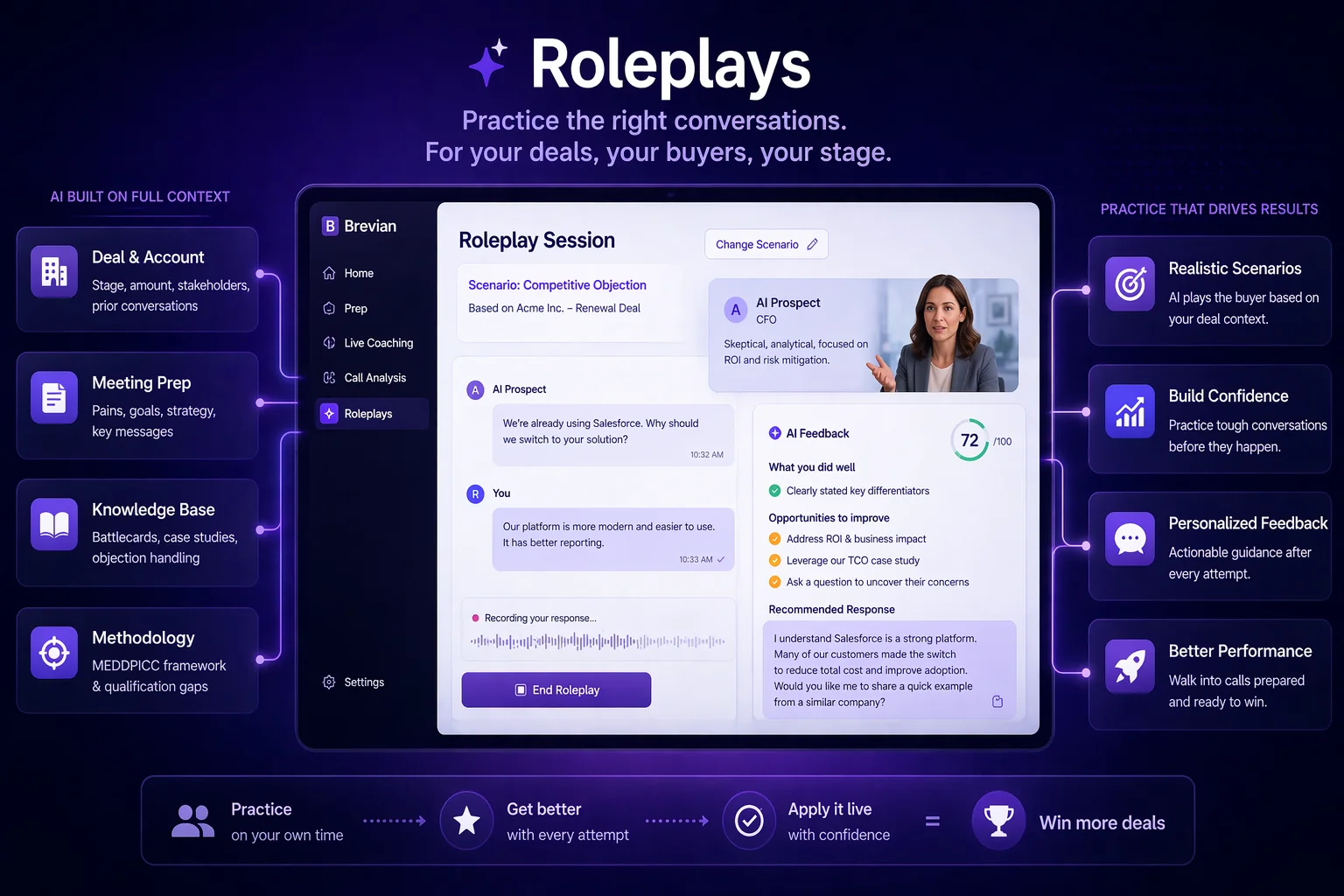
Every high-performance profession has structured practice. Sales is the exception. Brevian Roleplays let reps rehearse deal-specific scenarios grounded in real context.

Every other performance profession builds practice into the workflow. Sales expects reps to improve by playing live games.
A surgeon does not walk into the operating room and learn on the patient. A pilot does not learn to handle turbulence on a commercial flight with 200 passengers. An athlete does not practice new plays for the first time in a game that counts. Every high-performance profession has structured practice built into the development path, separated from the moments that carry real consequences.
Sales is the exception. Reps are expected to improve by doing the job. The next call is both the performance and the practice. When a rep encounters a competitive objection they have never handled before, they handle it live, with a real prospect, in a deal that matters. The learning happens after, in the debrief. But the moment is already gone.
Why Traditional Roleplay Falls Short
Traditional roleplay has existed in sales for decades, and for good reason. Practicing a conversation before it happens reduces the gap between knowing what to say and being able to say it under pressure. The challenge has always been making it happen consistently.
Manager time is the primary constraint. Running a meaningful roleplay requires a manager to block time, prepare a scenario, play the prospect convincingly, and deliver feedback. That competes with pipeline reviews, forecasting, 1:1s, and the twenty other things a frontline manager does in a week. Most teams run roleplays during onboarding and then they fade.
Peer roleplays fill some of the gap but lack realism. A colleague who sells the same product cannot convincingly push back the way a skeptical CFO or a technical evaluator would. They know the answers. They pull their punches. The practice is better than nothing but does not prepare the rep for what the real conversation will feel like.
Generic scenario libraries miss the point entirely. Practicing a standard cold call objection does not help when the rep's next meeting is a technical deep-dive with a prospect who is actively evaluating two competitors.
Deal-Specific Practice
Brevian Roleplays are built on a different premise: practice should be as specific as the call it prepares you for.
When a rep has a meeting tomorrow, Brevian can generate a roleplay scenario grounded in that specific deal. The AI plays the prospect using what Brevian knows about the account: the company, the deal stage, the stakeholders, the pains that have been discussed in prior meetings, the competitive landscape. The pushback is realistic because it is informed by real context, not a generic script.
When Call Analysis identifies a gap, roleplays let the rep practice exactly that scenario before the next live call. A missed opportunity to connect a prospect's pain to a product capability becomes a practice scenario where the rep gets multiple attempts to make that connection, with feedback after each one. The gap between identifying a weakness and working on it shrinks from days to minutes.
The knowledge base that powers Meeting Prep, Live Coaching, and Call Analysis powers roleplays too. The AI prospect pushes back with objections drawn from your actual competitive landscape. The recommended responses are grounded in your enablement materials. When the rep practices handling a pricing objection, the feedback references your positioning, not generic sales advice.
Where Roleplays Create the Most Value
Three use cases define where roleplays create the most value.
New hire ramp. The first weeks on a new sales team are spent absorbing product knowledge, learning the methodology, and building confidence. Roleplays let new reps practice against realistic scenarios before they take live calls: discovery conversations, product demos, competitive positioning, objection handling. Each scenario is grounded in the org's actual knowledge base, so practice reinforces the right messages from day one. The gap between classroom training and field readiness gets shorter.
Big deal preparation. Before a high-stakes meeting, a rep can rehearse the conversation. The AI plays the prospect based on what is known about this deal: the stakeholder they are meeting, the objections likely to come up, the competitive dynamics at play. The rep can try different approaches, get feedback, and walk into the meeting having already navigated the hard moments once.
Targeted skill development. A manager reviews Call Analysis and sees that a rep consistently struggles with competitive positioning against a specific competitor. Instead of waiting for the next live call to coach on it, the manager assigns a roleplay scenario focused on exactly that situation. The rep practices until the response is sharp. The next live call is the performance, not the practice.
The Complete Coaching Loop
This is the piece that completes the coaching loop Brevian has been building.
Meeting Prep sets the strategy before every call. Live Coaching helps the rep execute during the call. Call Analysis evaluates what happened after and identifies what to improve. Roleplays let the rep practice those improvements before the next live conversation. Each layer feeds the next. Call Analysis finds a gap, roleplays address it, Meeting Prep incorporates what was learned, Live Coaching reinforces it in the moment.
The flywheel works because all four layers share the same Knowledge Engine. The competitive objection a rep practices in a roleplay is the same one Live Coaching will surface during a call. The discovery framework used in practice is the same one Call Analysis scores against. Nothing resets between touchpoints. The coaching compounds.
Who It Is For
For reps, roleplays mean practice on their own schedule, without judgment, as many times as they need, and then walking into the real call prepared. For managers, it means assigning targeted practice tied to real coaching gaps and verifying improvement before the next live meeting. For enablement teams, it means building roleplay libraries by deal stage, persona, and competitive situation, and seeing at scale which practice scenarios correlate with field improvement.
Brevian Roleplays are coming soon for all Brevian customers. Request early access to be among the first teams to practice the call before it happens.
Brevian is the knowledge-powered sales intelligence platform that bridges the gap between product innovation and sales execution. Learn more at brevian.ai.
FAQ
What are Brevian Roleplays?
Brevian Roleplays are AI-powered practice conversations where reps rehearse sales scenarios grounded in their actual deals, their org's knowledge base, and their competitive landscape. The AI plays the prospect with realistic pushback, and provides feedback after each attempt.
How are Brevian Roleplays different from generic AI roleplay tools?
Generic tools generate scenarios from a template. Brevian Roleplays are contextual: they use the same Knowledge Engine that powers Meeting Prep, Live Coaching, and Call Analysis. The AI prospect knows this deal, pushes back with your actual competitive landscape, and evaluates responses against your enablement materials.
Can managers assign specific roleplay scenarios?
Yes. When Call Analysis identifies a coaching gap, managers can assign a practice scenario focused on that exact skill or situation. This closes the loop between identifying a weakness and actively working on it.
How do Roleplays connect to the rest of Brevian's coaching features?
Meeting Prep sets the strategy. Live Coaching helps execute during the call. Call Analysis evaluates what happened after. Roleplays let reps practice what Call Analysis identified as improvement areas before the next live conversation. All four features share the same Knowledge Engine, so coaching compounds rather than resets.
If you liked this, you might want to read
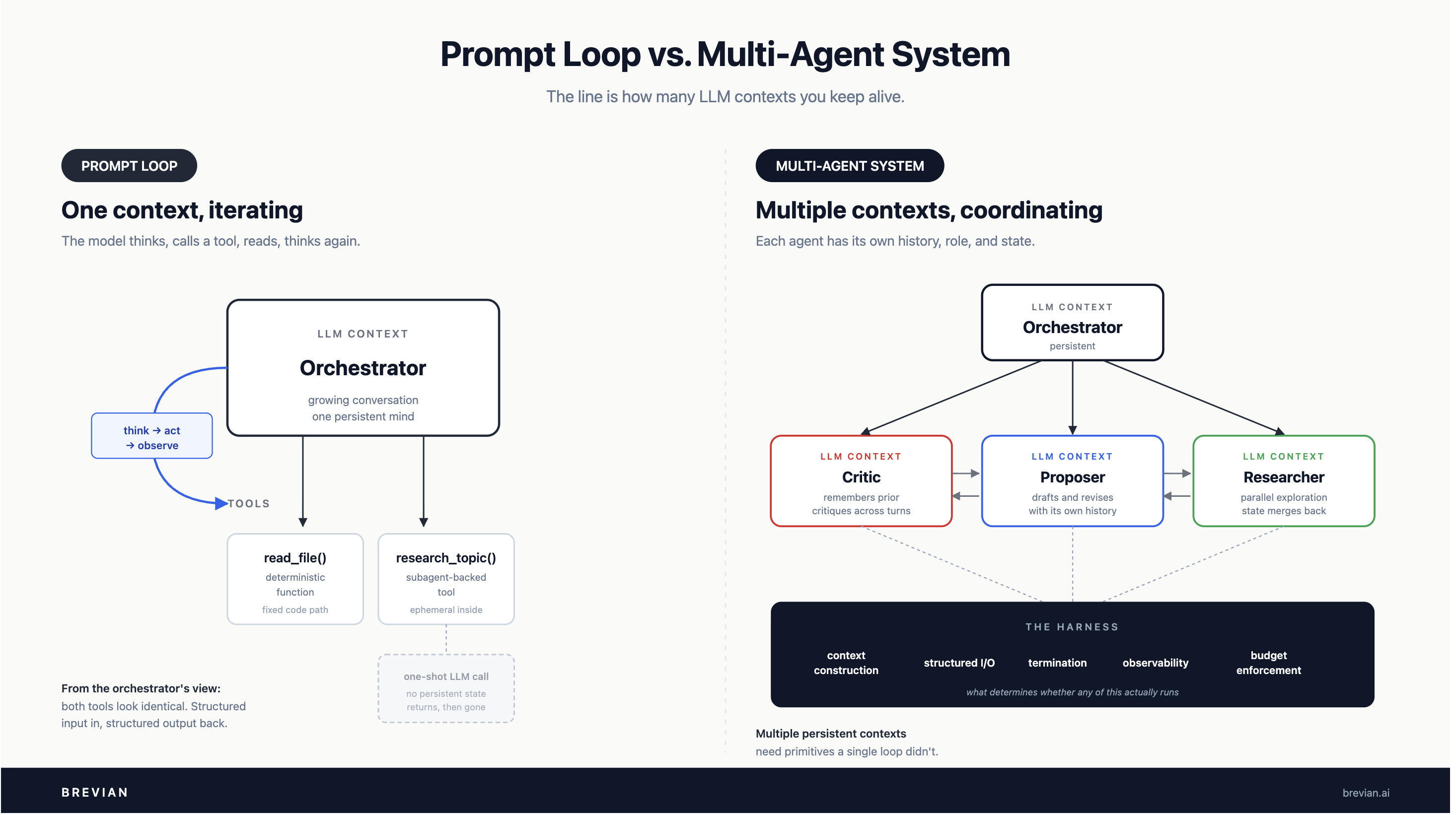
From Prompt Loops to Multi-Agent Systems: Why the Harness Matters
Where the line between a prompt loop and a multi-agent system actually sits, and what that implies for the harness you have to build underneath.
Introducing Brevian MCP: Ask Your Sales Data Anything
New intelligence, synthesized from every layer of your sales data, delivered as operational playbooks you can act on this week.
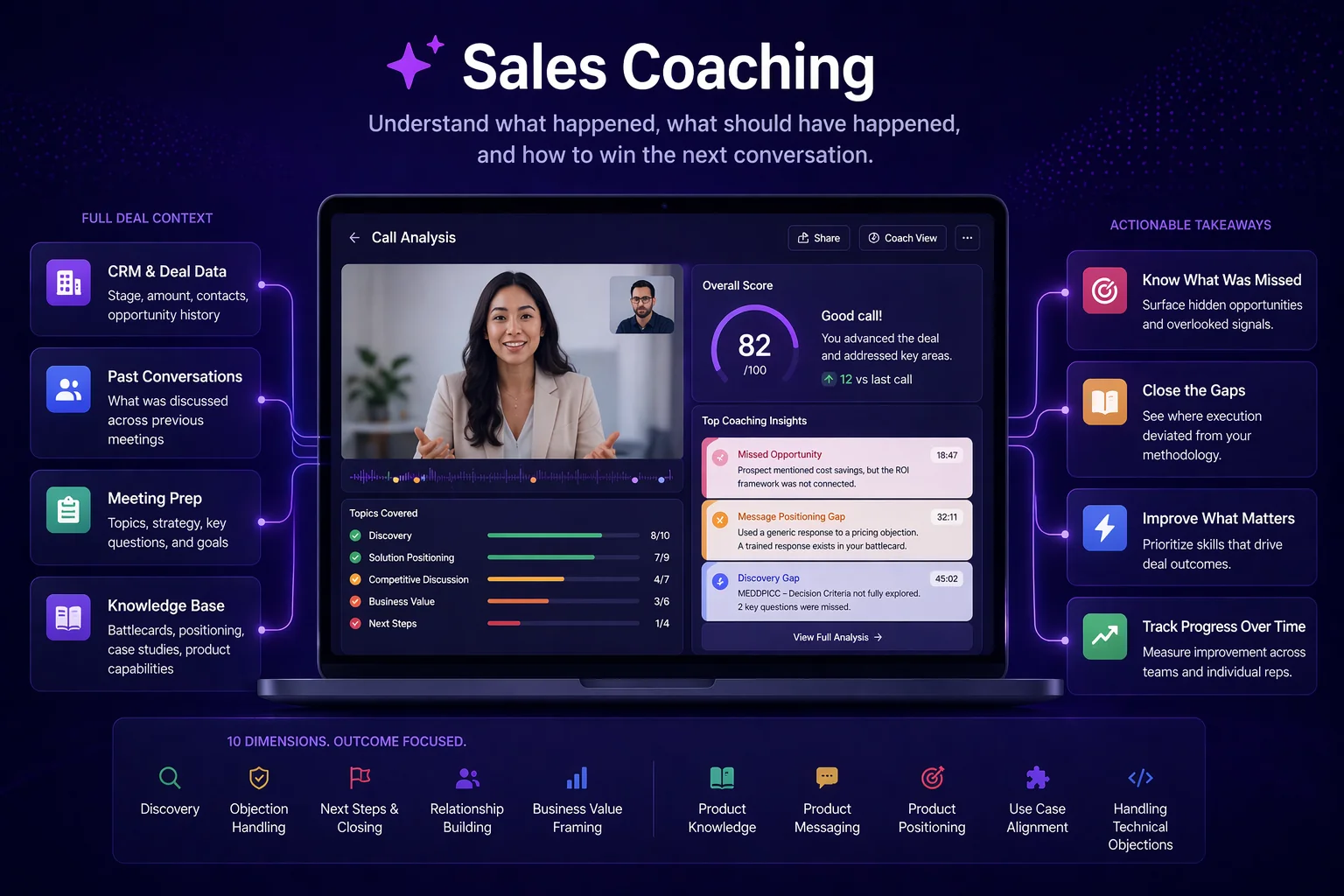
After-Call Coaching: What Should Have Been Said and Wasn't
Post-call coaching that reads the transcript in the context of the full deal. Brevian surfaces what should have been said and was not, grounded in your methodology and knowledge base.