Pipeline Review: The Signal Your Pipeline Has Been Missing
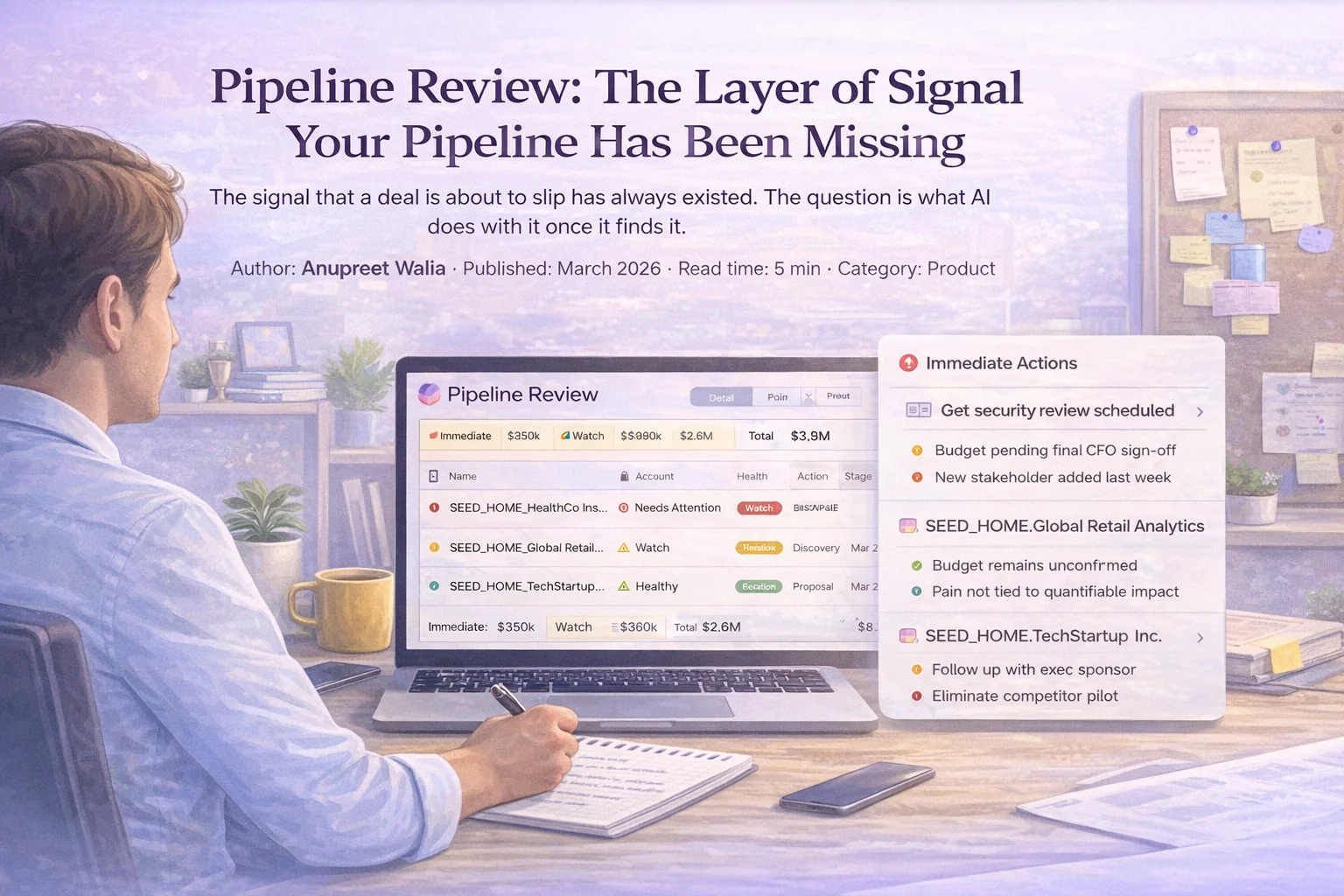
Brevian Pipeline Review surfaces six AI-powered signals per deal, from champion health to pain quantification, so sales managers run evidence-based reviews in minutes.

The signal that a deal is about to slip has always existed. The question is what AI does with it once it finds it.
Most sales teams already have good infrastructure for tracking deal activity. CRM dashboards, stage histories, activity logs: that data matters and it does its job well. What it was not designed to surface is the layer of signal that lives outside structured fields: whether the champion is still engaged, whether the pain has been tied to a number the buyer will actually defend internally, whether the qualification dimensions that predict late-stage slippage have been genuinely covered or just assumed. Those signals exist in conversation data, in stakeholder participation patterns, in the gap between what a rep knows and what has been explicitly confirmed.
The result is familiar to most sales leaders: commits that hold through three reviews slip in week four, deals that look fine on Monday are problems on Friday, and the post-mortem surfaces information that was technically available the whole time, just not connected in a way that made it visible before it mattered.
That is the problem Brevian's Pipeline Review is built to solve.
The first wave of AI in sales was about surfacing signal: finding the patterns buried in transcripts, activity logs, and CRM fields that humans would never have time to review manually. That was a genuine step forward. The second question, which is where Pipeline Review sits, is what you do with that signal once it is surfaced. Not just a flag or a warning color, but a judgment: this deal needs this specific action before your next review, and here is why. The direction that follows from there, and the direction Brevian is building toward, is AI that does not just name the action but takes it. Pipeline Review is the current expression of that arc.
How It Works
Pipeline Review is Brevian's pipeline health intelligence view, built on the idea that a useful review session ends with a prioritized list of actions, not just a prioritized list of deals to worry about. For every deal in your pipeline, Brevian computes a set of signals drawn from CRM data, meeting activity, and AI-extracted deal analysis, synthesizes them into a health assessment, and pairs that assessment with a specific action so the manager knows not just what is at risk but what to do about it before the week is out.
We built it around four principles that shaped every design decision.
Evidence over narrative. Every signal in Pipeline Review has an auditable reason behind it. When a deal is flagged as needing immediate attention, the view tells you why: "No activity in 18 days" or "VP sponsor non-responsive for two weeks" or "Budget approval pending Q2 board meeting." Managers stop asking "how do you know?" because the answer is already visible. Reps stop debating the flag because the evidence is right there.
Change detection over static state. A dashboard that shows you the current state of your pipeline is useful once. A view that shows you what changed since last week is useful every time. Pipeline Review is built around the question managers actually want answered on Monday morning: what moved, what deteriorated, and where do I need to intervene before it is too late.
Signal-to-noise control. The value of a health signal depends entirely on how often it fires. Pipeline Review uses conservative thresholds deliberately. A deal has to be genuinely stalled (over 14 days without activity, over 30 days in stage) before velocity turns red. MEDDPICC qualification only flags critical when fewer than three of eight components are confirmed. The goal is a short list of deals that actually need attention today, not a full pipeline painted red.
Decision-ready density. The default view is designed for executives: ten deals per page, sortable by health, with a summary bar at the top showing the breakdown of your pipeline value by status. A CRO can orient in 30 seconds. A manager running a 1:1 can filter to a single rep and see exactly which deals need coaching and why.
Six Signals, Two Scores
Pipeline Review surfaces six signals for every deal in your pipeline, combining deterministic data with AI-extracted intelligence.
Velocity tracks deal momentum using CRM activity timestamps and stage history. It measures days since the last recorded activity and days spent in the current stage, flagging deals that have gone quiet or stalled against your team's typical benchmarks. A deal that has not moved in three weeks and is approaching its close date is visible immediately, without anyone having to flag it.
Qualification audits every deal against your MEDDPICC framework and displays completion as a set of color-coded indicators showing which components are confirmed and which are gaps. At a glance, a manager can see that a deal in late stage is missing Economic Buyer and Paper Process, the two components most predictive of last-minute slippage, and address that gap in the next 1:1 rather than in a post-mortem.
Champion assesses the strength and engagement of the deal's internal advocate based on AI analysis of meeting transcripts and stakeholder participation patterns. Champion going quiet is one of the strongest signals a deal is at risk, and it almost never shows up in CRM fields. It shows up in whether they attended the last three calls, and Pipeline Review tracks that.
Risk surfaces the specific deal risks Brevian has extracted from conversation history: budget uncertainty, competitive pressure, stakeholder changes, technical blockers, timeline concerns. Each risk is evidence-backed, not inferred, and each comes with the context that triggered it so managers can walk into a 1:1 already knowing what to discuss.
Buyer Urgency evaluates whether the prospect has a real and time-bound reason to make a decision. Deals without a compelling event or a validated cost of inaction are the ones that slip quarter after quarter while staying firmly in the commit column. Pipeline Review makes that visible before it costs you the forecast.
Pain Quantified measures whether the business pain driving the deal has been concretely tied to a number. A prospect saying they have a problem is not the same as a prospect saying the problem costs them $2M a year in manual work or 40 hours per rep per quarter. Pain that has been quantified is stickier, harder to deprioritize, and far more likely to survive the internal justification process. Deals where pain remains vague get flagged so the rep knows exactly what to establish before the next call.
The six signals feed into two separate composite scores, and the distinction between them is where the shift from surfacing to judgment becomes tangible. Health reflects the structural integrity of the deal: how well-qualified it is, how engaged the champion is, how real the urgency is. Action reflects what needs to happen this week regardless of health. It is not a flag or a warning color. It is the AI's assessment of what specific intervention this deal requires before the next review, whether that is a follow-up that has gone unanswered, a quantification gap to close before a stakeholder meeting, or a risk that emerged in the last call and has not yet been addressed. The manager still makes the call. But they are making it with the analysis already done and the next step already named. A manager can sort the entire pipeline worst-first on either dimension and have a complete, action-ready picture in under five minutes.
Four Use Cases
The four use cases Pipeline Review is built for map directly to the sessions your revenue team is already running.
For the Monday exec pipeline review, the workflow is: filter to this quarter, sort by health, review the short list of Immediate deals with their reasons, check the summary bar for the composition of at-risk pipeline value. A CRO can run that review in 20 minutes with more specificity than a 90-minute status call ever delivered.
For the manager 1:1 deal inspection, filter by owner, review qualification gaps and velocity signals side by side, click into deals where champion or risk signals are flagged. The manager walks in knowing exactly which deals need coaching and which gaps to close, not discovering them mid-conversation.
For end-of-quarter risk triage, filter to high-value deals in late stages, focus on anything in Watch or Immediate status with a close date inside the quarter. Velocity signals surface close-date-approaching deals that have gone quiet. Risk signals identify specific blockers where exec air cover might move things.
For forecast integrity, review qualification scores across your commit column. Deals with fewer than six MEDDPICC components confirmed are structurally under-qualified regardless of what the rep says. Champion signal validates whether internal advocacy exists. Buyer Urgency confirms the timeline is grounded in something real. Commits built on evidence hold. Commits built on optimism do not.
Sales Managers run reviews that actually surface problems early rather than confirming good news until the last two weeks of the quarter. VP Sales and CROs get a credible, evidence-backed view of pipeline composition and forecast integrity that complements rather than replaces the rep conversation, because the evidence is already visible before it starts. RevOps gets qualification data that reflects what was actually confirmed in conversations, not what was manually entered before the review.
Pipeline Review works alongside Deal Review (deep-dive deal analysis), Meeting Prep (pre-meeting intelligence), Live Assist (real-time guidance during calls), and CRM Updates (automated data hygiene) to cover the full lifecycle of a deal. Because all five features draw from the same Knowledge Engine, the signals that surface in Pipeline Review are grounded in the same conversation data that prepares your reps for their next call and updates your CRM fields after it.
The longer arc here matters. Most conversations about AI in sales stop at visibility: better dashboards, smarter summaries, faster access to what is already known. Pipeline Review moves past that to judgment, specific and actionable, grounded in evidence. The next step in that arc is execution: AI that does not just identify that a follow-up is overdue or a quantification gap needs closing, but takes the action. That is where Brevian is headed, and Pipeline Review is the foundation it is being built on.
Pipeline Review is available now for all Brevian customers. Request a demo to see how it works with your pipeline, your methodology, and your team.
Brevian is the knowledge-powered sales intelligence platform that bridges the gap between product innovation and sales execution. Learn more at brevian.ai.
FAQ
What is Brevian Pipeline Review?
Brevian Pipeline Review is an AI-powered pipeline health intelligence view that surfaces six evidence-backed signals for every deal in your pipeline, including velocity, qualification, champion strength, deal risk, buyer urgency, and pain quantification, and produces separate Health and Action scores so sales managers can run focused, evidence-grounded reviews in minutes rather than hours.
How is Pipeline Review different from a CRM pipeline view?
CRM pipeline views are built around structured fields: stage, close date, deal value, activity counts. Those inputs matter and Pipeline Review incorporates them. What it adds is a layer those fields were never designed to capture: champion engagement patterns from transcripts, qualification completeness validated against actual conversations, risk signals extracted from what was said rather than what was entered, and urgency grounded in confirmed compelling events.
How does Pipeline Review relate to Deal Review?
Deal Review is a deep-dive assessment of a single deal, covering champion analysis, risk factors, qualification gaps, and recommended next steps in detail. Pipeline Review uses Deal Review's AI-extracted signals as inputs and presents them across your entire pipeline in a heat map view designed for weekly review sessions, not individual deal prep.
How does Pipeline Review score deal health?
Pipeline Review produces two separate scores for every deal. Health reflects the structural integrity of the deal across qualification, champion engagement, buyer urgency, pain quantification, velocity, and risk. Action reflects what needs to happen this week regardless of overall health. A deal can be healthy and still carry a critical action today, and surfacing that distinction is what prevents well-managed deals from drifting quietly toward a slip.
Who is Pipeline Review designed for?
Pipeline Review is primarily designed for Sales Managers running weekly deal inspections and 1:1 coaching sessions, and for VP Sales and CROs running exec forecast calls. RevOps teams also benefit from consistent qualification coverage data across the pipeline without requiring reps to manually update fields before every review.
How does Pipeline Review go beyond surfacing data to recommending action?
Most pipeline tools surface information and stop: here is what your data shows, here are the deals to watch. Pipeline Review takes the next step. The Action score is separate from overall deal health and reflects what specifically needs to happen this week, grounded in the conversation data and signals Brevian has already analyzed. The goal is that a manager finishes a Pipeline Review session with a prioritized list of concrete next steps, not just a prioritized list of deals to think about. The AI does the diagnostic work. The manager runs the play.
If you liked this, you might want to read
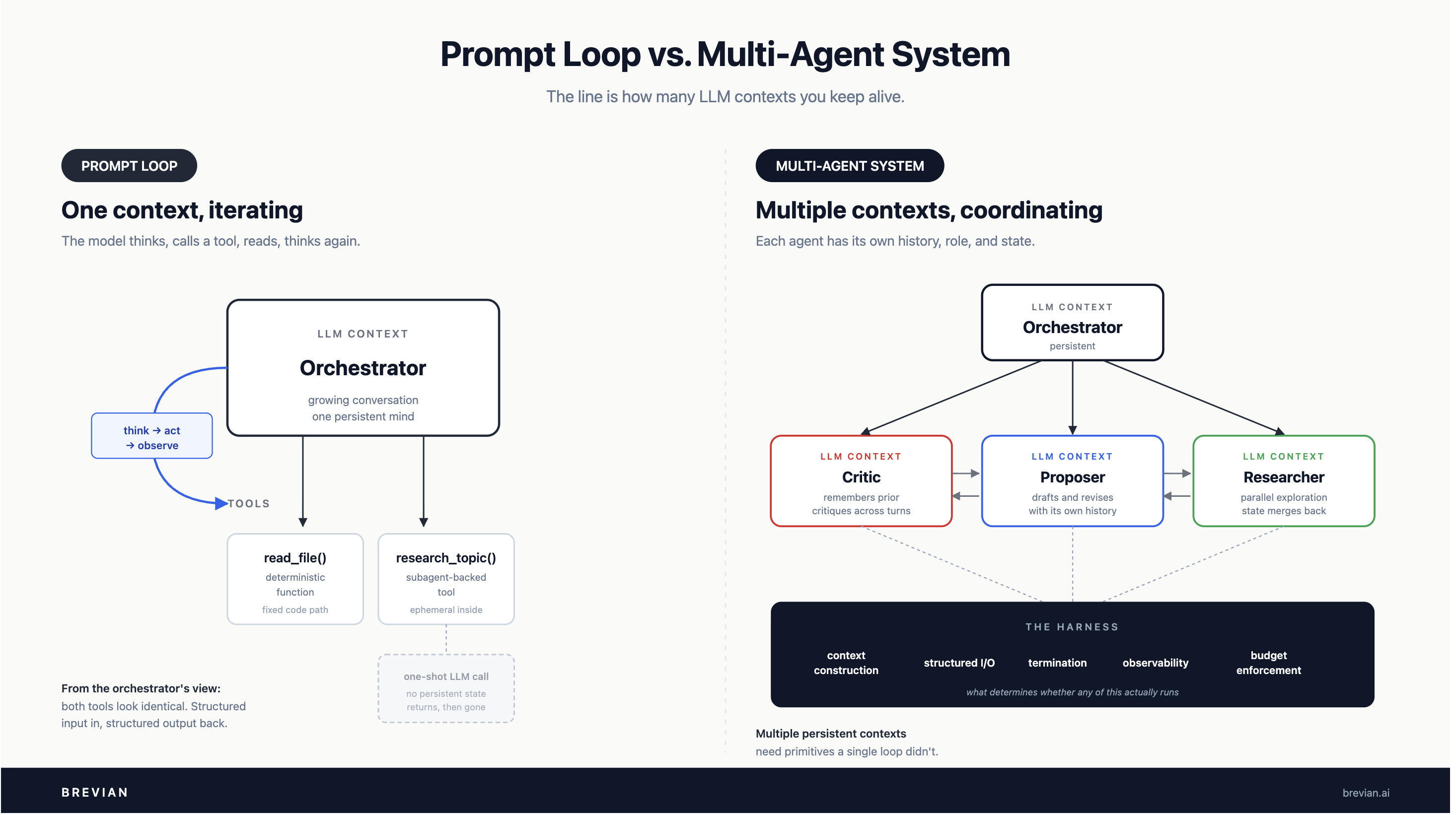
From Prompt Loops to Multi-Agent Systems: Why the Harness Matters
Where the line between a prompt loop and a multi-agent system actually sits, and what that implies for the harness you have to build underneath.
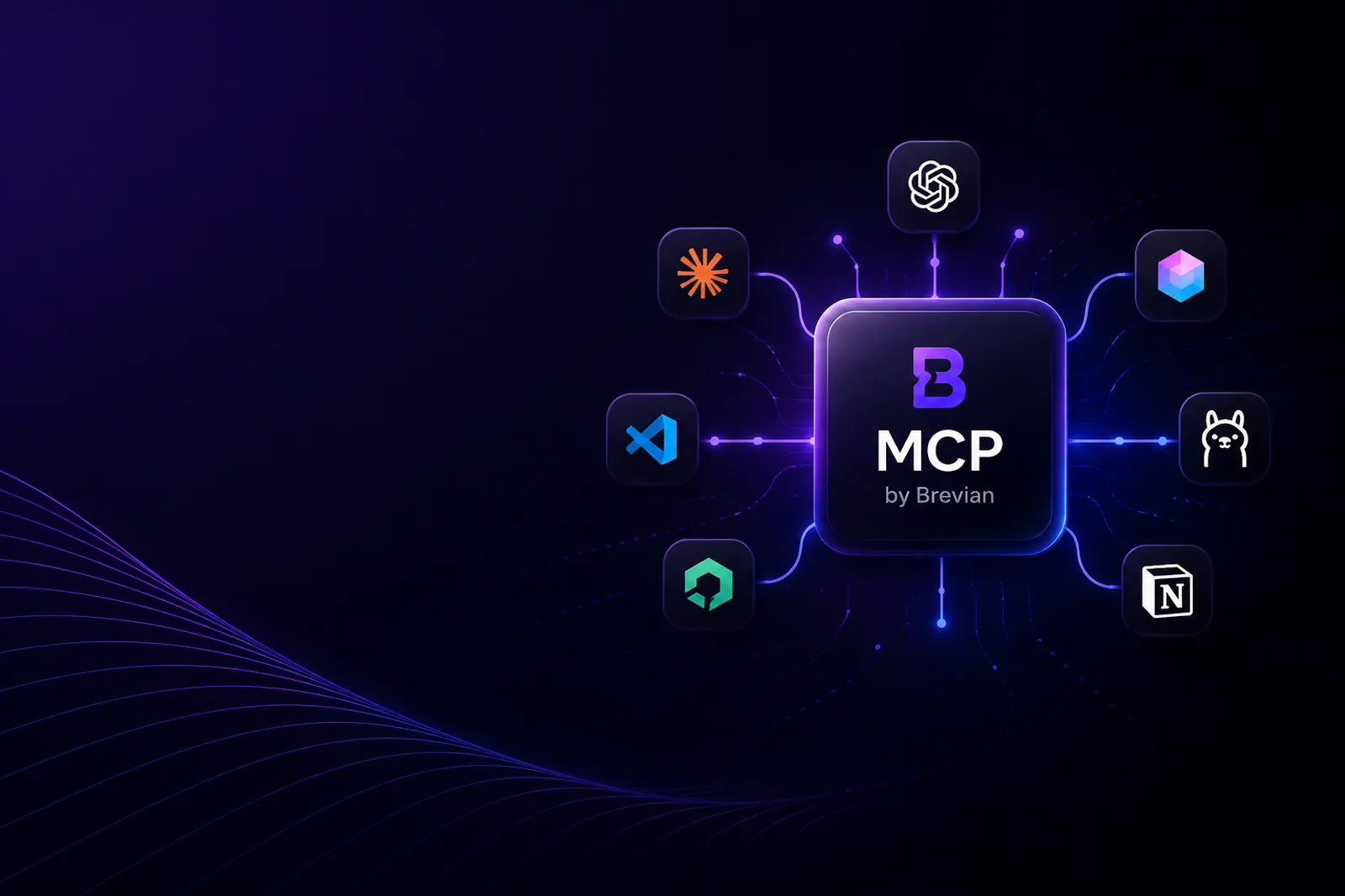
Introducing Brevian MCP: Ask Your Sales Data Anything
New intelligence, synthesized from every layer of your sales data, delivered as operational playbooks you can act on this week.
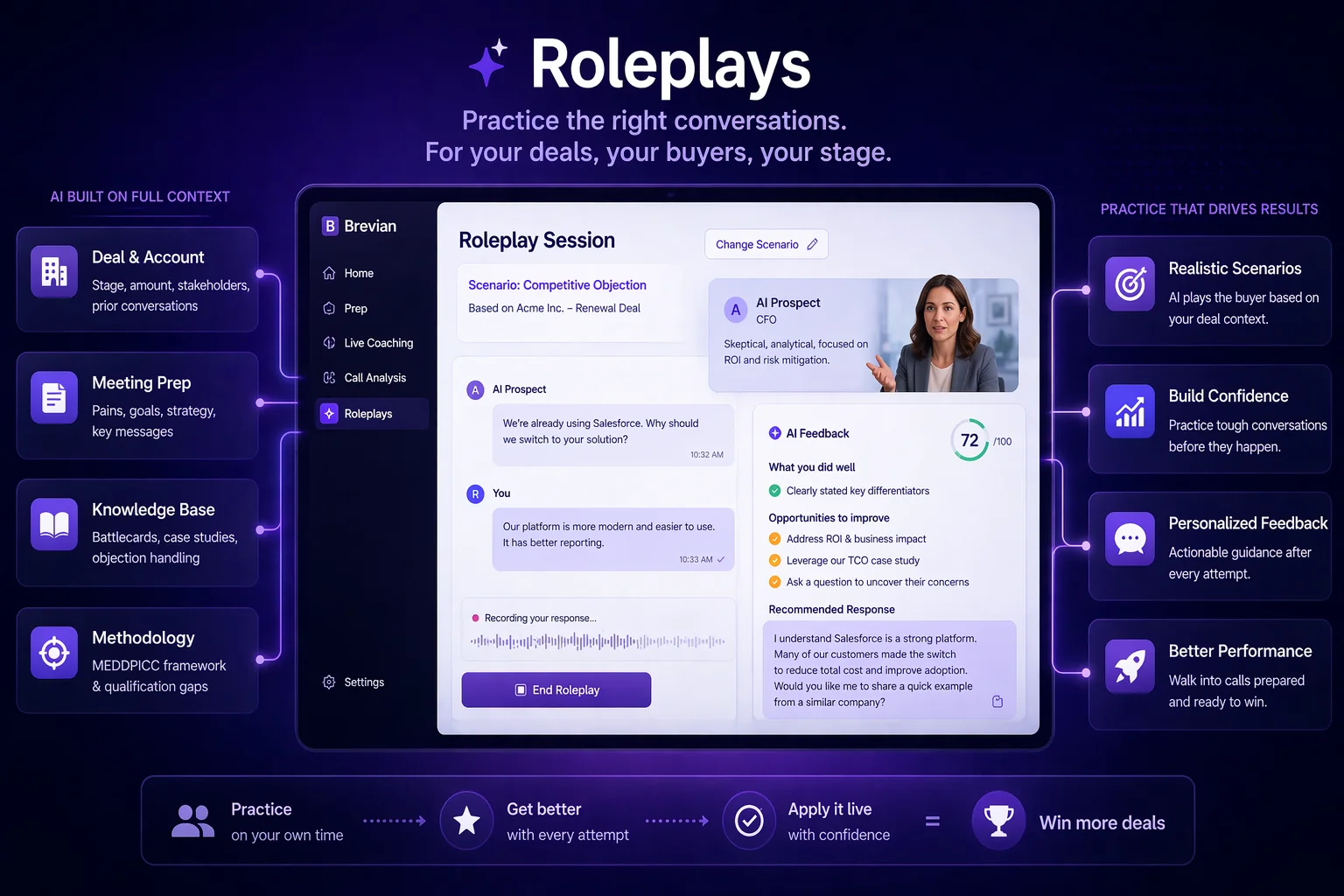
Practice the Call Before It Happens
Every high-performance profession has structured practice. Sales is the exception. Brevian Roleplays let reps rehearse deal-specific scenarios grounded in real context.